Travel & Circadian Disruption

Understanding jet lag effects on appetite, metabolism, and eating patterns

Circadian Rhythm Disruption in Travel

Travel across time zones disrupts circadian rhythms that regulate eating, appetite, and metabolism. Circadian systems—internal biological clocks—synchronise to local light-dark cycles and meal timing patterns. When these external cues suddenly shift via air travel, internal circadian timing becomes misaligned with external time, creating circadian desynchrony.

Jet lag describes the mismatch between internal circadian timing and external local time. This desynchrony affects multiple physiological systems: sleep-wake timing, hormone secretion, body temperature regulation, and appetite signalling. Eating in new time zones occurs when internal biological systems are still oriented to departure location timing, producing physiological dysregulation.
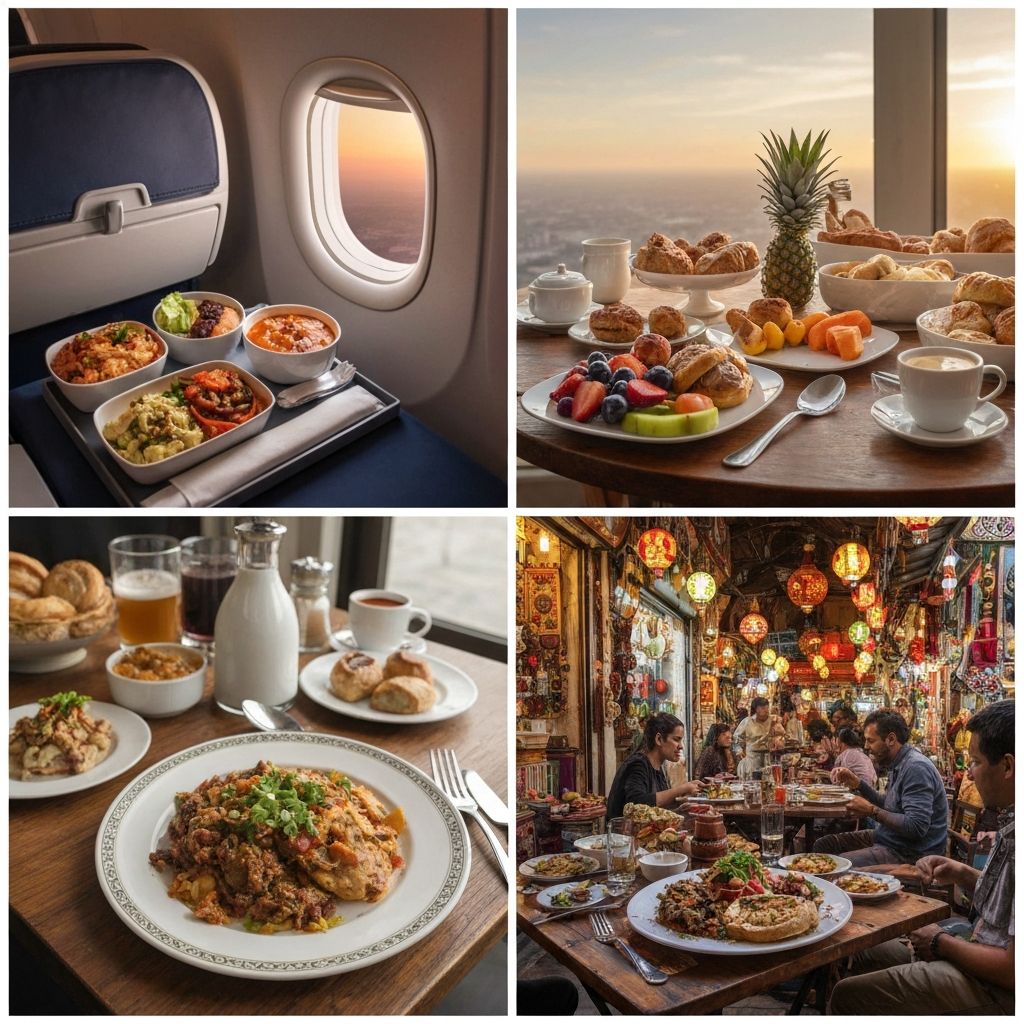
Meals in different time zones and travel settings

Appetite & Hunger Disruption

Misaligned Hunger Signals

During jet lag, hunger and appetite signals remain aligned to departure-time circadian rhythms. If travelling east (shortening the day), hunger signals arrive at local meal times that feel premature relative to internal timing. Travelling west (lengthening the day) causes opposite desynchrony, with hunger signals arriving later than local meal times.

This mismatch produces hunger at inappropriate times: appetite loss when meals are available; intense hunger when food access is limited. Travellers frequently report eating when not biologically hungry, or lacking appetite despite extended time without food. These dissociations reflect circadian disruption, not pathological eating.

Metabolic Consequences

Circadian desynchrony impairs metabolic efficiency. Insulin sensitivity varies across the circadian cycle; glucose metabolism differs between aligned and misaligned circadian states. Eating during circadian phases normally occupied by sleep produces different metabolic handling than normal meal timing.

Digestive enzyme secretion follows circadian patterns. Eating when digestive systems are at circadian low-points results in less efficient nutrient absorption and processing. These metabolic changes are temporary—circadian re-entrainment gradually restores normal patterns—but produce acute dysregulation during travel.

Circadian Re-entrainment Process

Recovery from jet lag involves circadian re-entrainment—gradual synchronisation of internal clocks to new local time cues. Light exposure is the primary re-entrainment signal. Morning light exposure after eastward travel accelerates clock advancement; evening light after westward travel delays the clock to match local time.

Meal timing also contributes to re-entrainment. Eating at local meal times—even without internal hunger—helps shift circadian rhythms toward local timing. This explains why eating according to destination meal schedule, rather than internal hunger cues, facilitates faster circadian adjustment. The body's eating schedule gradually synchronises to local patterns.

Re-entrainment speed varies with travel direction and degree of time-zone shift. Eastward travel (time advance) typically produces slower adjustment than westward travel (time delay). Greater time-zone shifts require longer re-entrainment periods. During this transition, eating remains somewhat misaligned to internal circadian state, producing the continued appetite dysregulation characteristic of jet lag.

Practical Eating During Travel

Intentional Meal Timing Strategy

Rather than following internal hunger cues during the immediate travel period, strategically timed eating can facilitate circadian adjustment. After westward travel, eating breakfast later than internal hunger suggests and dinner earlier helps advance body clock toward local time. After eastward travel, opposite timing facilitates re-entrainment.

Timing first meal and timing intervals between meals influence clock adjustment speed. Consulting light exposure plus meal timing produces faster re-entrainment than either strategy alone. This explains why travel guides recommend eating on local meal schedule despite lack of hunger.

Food Choices During Circadian Desynchrony

During jet lag, digestive efficiency is temporarily compromised. Lighter meals, foods with clearer digestion patterns, and smaller portions may be tolerated better than typical meal sizes. Avoiding excessive fats and fibre during the acute jet-lag period may reduce gastrointestinal discomfort.

Caffeine timing significantly impacts circadian adjustment. Morning caffeine consumption helps promote alertness aligned with new local time; evening caffeine impairs sleep during circadian adjustment period. These pharmacological interventions interact with meal timing and light exposure in complex ways affecting re-entrainment speed.

Duration of Circadian Adjustment

Circadian re-entrainment typically requires approximately one day per time-zone hour crossed, with variation based on individual differences and re-entrainment strategy. A 6-hour time-zone shift typically requires 4-6 days for complete re-entrainment; larger shifts proportionally extend adjustment duration.

During this adjustment period, eating patterns remain somewhat atypical as internal hunger signals gradually align with local meal timing. This is a temporary state—not a sign of pathological eating—but a normal physiological response to circadian disruption. Expecting and accepting variable appetite and unusual eating timing during travel facilitates more relaxed approach to eating while in transit.

Important Note: This article provides educational information about circadian disruption and travel. It is not medical advice. Individual experiences with jet lag vary. For health concerns related to travel or eating, consult qualified healthcare professionals.
Back to Articles Back to Home