Contextual Science of Nutrition
Explore how real-world contexts shape eating behaviour, physiological responses, and body weight regulation. An educational resource on the science of nutrition in everyday life.

Explore how real-world contexts shape eating behaviour, physiological responses, and body weight regulation. An educational resource on the science of nutrition in everyday life.
NutriContextUK provides independent, evidence-based explanations of how contextual factors—social, emotional, environmental, and temporal—influence nutritional behaviour and physiological responses. This resource examines the science without prescriptive guidance, aiming to deepen understanding of nutrition within real-world conditions.
Eating behaviour is shaped by multiple interacting contexts. Research demonstrates that sensory environments, social presence, emotional states, time of day, and personal circumstances all influence food choices, intake quantity, and metabolic processing. Understanding these contexts helps explain why identical meals result in different physiological responses depending on surrounding conditions.
The science reveals that appetite regulation is not solely determined by caloric content or macronutrient composition. External cues—lighting, noise, social dynamics, temporal availability—and internal states—stress, circadian rhythm, emotional arousal—modulate how the body processes and responds to food.


Eating in social settings produces measurably different outcomes than solo consumption. Research shows that meal duration, portion intake, and satiety signals differ significantly when eating with others versus alone. Emotional contexts—stress, anxiety, celebration—also alter both immediate food choices and physiological responses.
Cultural factors, shared meals, and relational dynamics contribute substantially to how bodies regulate energy intake and nutrient absorption. These findings highlight why individual dietary approaches fail to account for the reality of human eating, which is inherently contextual.
Circadian rhythms profoundly influence how the body processes food. Research indicates that identical meals consumed at different times produce different metabolic responses. Morning, afternoon, and evening eating involve distinct hormonal signalling, enzyme activity, and energy utilization patterns.
Meal timing relative to sleep, light exposure, and daily activity patterns affects hunger hormones, insulin sensitivity, and digestive efficiency. Understanding temporal context is essential to explaining variability in individual responses to nutrition.

Geographic location, cultural background, food availability, economic circumstances, and environmental conditions all shape what individuals eat and how their bodies respond. Food choice is not purely individual; it reflects access, tradition, and environmental reality.
Seasonal availability of foods influences both nutritional intake and metabolic adaptation. Climate, infrastructure, and socioeconomic factors determine which foods are accessible and affordable. These macro-contextual elements are inseparable from personal nutrition science.
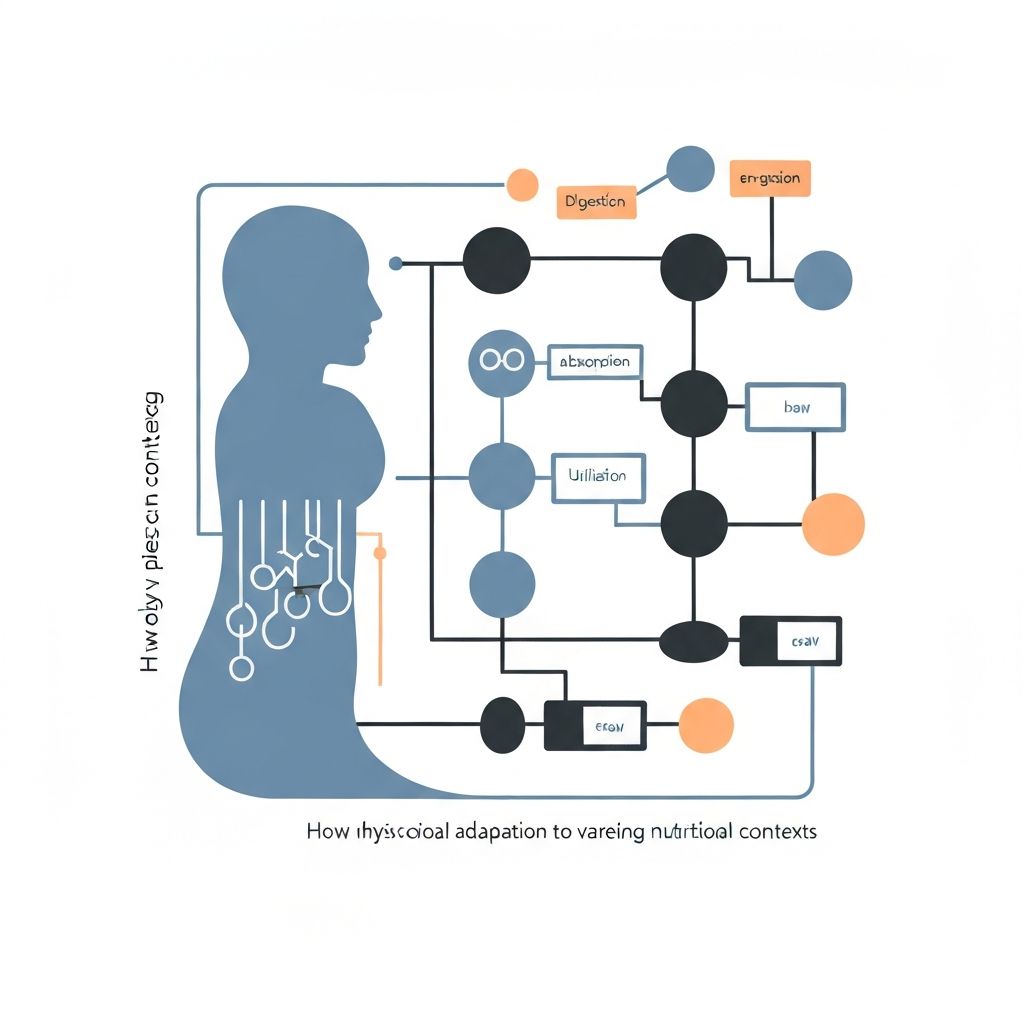
The human body demonstrates remarkable capacity to adjust to changing nutritional contexts. Metabolic flexibility, adaptive thermogenesis, and hormone sensitivity allow physiological responses to vary based on prevailing circumstances. Energy balance is not a fixed equation but a dynamic process shaped by context.
Research on energy homeostasis reveals that body weight regulation involves complex feedback mechanisms responsive to environmental, emotional, and temporal cues. Understanding this plasticity helps explain why universal dietary prescriptions fail to account for individual variability.
The sensory environment—flavour perception, aroma, visual presentation, ambient noise, temperature—significantly influences eating experience and satiety signals. Research demonstrates that identical food tastes different depending on atmospheric context.
Plate size, eating pace, distraction level, and sensory richness of the eating environment all affect intake quantity and satisfaction. These perceptual contexts directly influence physiological hunger and fullness signals.

Ecological momentary assessment studies capture eating in real-world conditions rather than laboratory settings. These investigations reveal substantial variability in how contexts shape food intake, satisfaction, and metabolic response. Field research demonstrates the limitations of controlled studies for understanding how people actually eat.
Cross-cultural nutrition research highlights how contextual factors produce different outcomes across populations. Food availability, preparation methods, eating timing, and social dynamics vary globally, producing diverse patterns of eating behaviour and metabolic adaptation.
Explore research on how daily routines shape eating patterns, meal timing, and intake differences between structured weekdays and flexible weekends.
Read ArticleExamine the mechanisms linking emotional and stress contexts to food selection and physiological eating responses in real-world situations.
Read ArticleDiscover how social presence affects intake quantity, meal duration, satiety signals, and eating experience in comparative settings.
Read ArticleUnderstand how jet lag, time zone changes, and travel contexts affect appetite regulation and metabolic responses to food.
Read ArticleReview evidence on how screen presence influences awareness, eating pace, portion perception, and fullness signal recognition.
Read ArticleExplore how seasonal variation in food access shapes nutritional intake patterns and metabolic adaptation across the year.
Read ArticleDiscover in-depth explorations of contextual nutrition science. Read our articles on specific topics affecting everyday eating, supported by research on how circumstances shape physiological responses.
View All Articles