Seasonal Food Availability & Energy Balance

Understanding how seasonal context shapes nutrition and metabolic adaptation

Seasonal Variation in Food Access

Seasonal changes in food availability represent a fundamental contextual factor influencing eating behaviour and metabolic adaptation. Spring and summer provide fresh fruits, vegetables, and increased physical activity opportunities. Autumn offers harvest abundance and storage crops. Winter restricts fresh food availability in temperate climates, requiring reliance on stored, preserved, or imported foods.

This seasonal variation shaped human nutrition throughout evolutionary history. Seasonal abundance and scarcity created cyclical patterns of nutritional intake, energy storage, and metabolic adjustment. Modern food systems diminish but do not eliminate seasonal effects: even in urbanised settings with global food distribution, seasonal variation remains evident in food availability, cost, and cultural eating patterns.
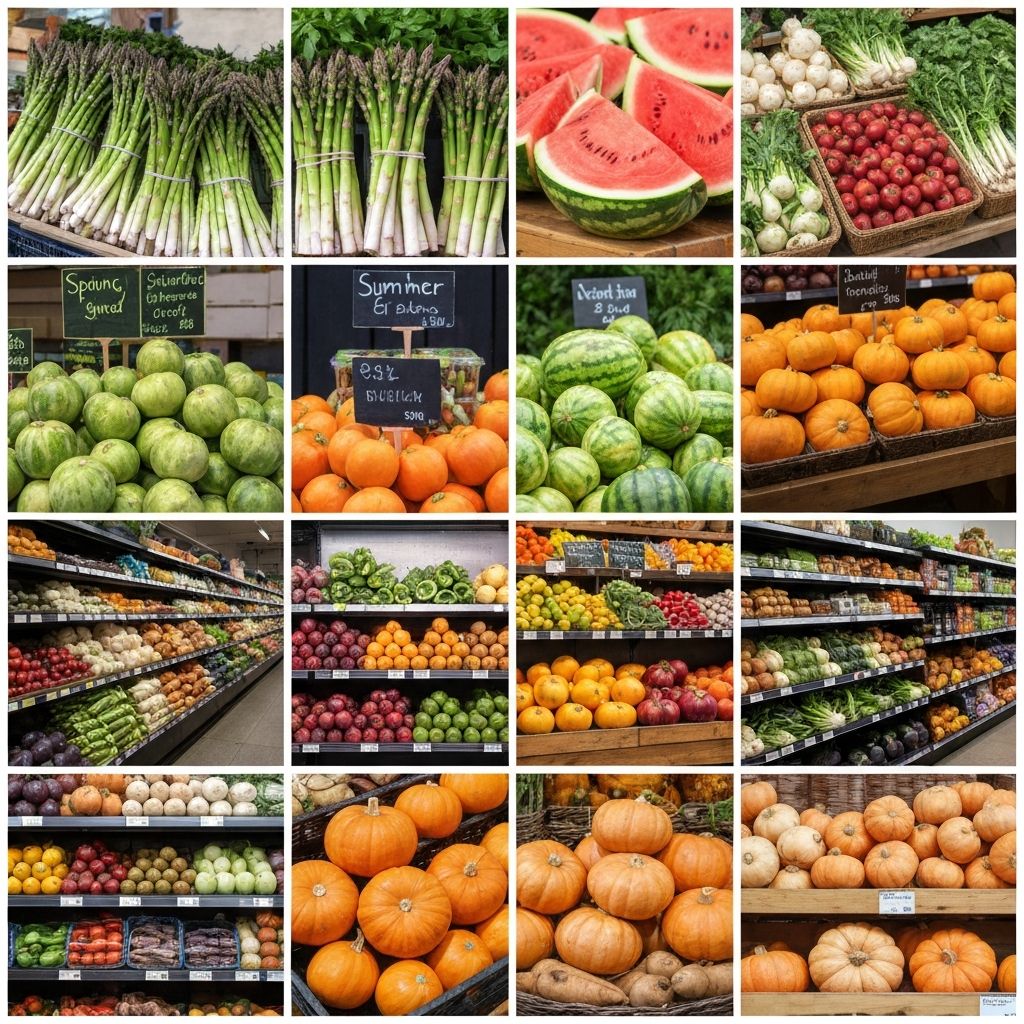
Seasonal food progression throughout the year

Spring & Summer Eating Patterns

Abundance & Increased Activity

Spring and summer seasonality produces multiple eating context changes simultaneously. Fresh produce becomes abundant and affordable. Outdoor activity increases, raising energy expenditure. Daylight extends, aligning with circadian promotion of physical activity. Food diversity increases through local vegetable and fruit availability.

These seasonal shifts typically produce measurable changes in macronutrient composition of diet. Fresh fruits and vegetables comprise larger proportion of intake; processed and stored foods decline. Physical activity increases typically correlate with or exceed dietary changes in affecting overall energy balance.

Seasonal Eating Behaviour

Summer eating culture emphasises lighter meals, fresh salads, and increased eating outdoors in natural settings. Social eating increases—picnics, outdoor dining, longer mealtimes. These behavioural changes interact with food availability changes to produce measurable seasonal nutrition patterns.

Hydration patterns increase seasonally with temperature. Water intake increases; thirst responses heighten. Some evidence suggests summer seasonal eating produces slightly lower weight-bearing effects compared to autumn/winter patterns, though mechanisms likely involve multiple interacting factors rather than single cause.

Autumn & Winter Nutritional Context

Harvest Abundance & Storage

Autumn provides seasonal crop abundance—root vegetables, squash, legumes, nuts, seeds. Traditional food preservation occurs: canning, fermenting, drying. Winter eating shifts to these preserved foods plus imports. Food becomes less fresh, more processed, and often higher in salt and sugar as preservation requirements.

Calorically denser foods become available and affordable in winter—nuts, dried fruits, preserved foods, grain storage crops. These foods historically provided necessary energy density for winter survival. Modern access to preserved and imported foods continues winter availability of calorie-dense, shelf-stable options.

Physical Activity & Metabolic Changes

Winter typically produces reduced outdoor physical activity due to temperature, daylight reduction, and weather. This decreased activity aligns with increased food availability of calorie-dense foods. Circadian rhythm shifts—shorter daylight—interact with behavioral changes and food availability to influence eating patterns.

Some evidence suggests seasonal metabolic adaptation: human metabolism may marginally increase in winter for thermoregulation, potentially increasing caloric needs. Combined with reduced activity and increased food availability, winter represents a distinct seasonal eating and metabolic context compared to other seasons.

Seasonal Mood & Eating Behaviour

Seasonal affective changes—mood variations associated with season—influence eating behaviour. Reduced winter daylight is associated with increased carbohydrate preference and increased appetite in some individuals. These mood-eating associations may interact with food availability: winter carbohydrate preference aligns with increased availability of carbohydrate-rich stored foods.

Holiday and cultural celebrations concentrate in autumn and winter in many cultures, producing seasonal eating occasions. Holiday meals feature specific foods, alcohol, and celebratory eating contexts. These cultural-seasonal factors are inseparable from biological seasonal factors in determining seasonal eating patterns.

Summer social eating increases—outdoor gatherings, vacations, extended meal times. These social-seasonal factors offset reduced calorie density of summer food availability, illustrating how multiple seasonal contexts interact to shape overall eating patterns.

Geographic & Climate Variation

Temperate vs Tropical Seasonality

Seasonal variation intensity depends on geographic location. Temperate climates show pronounced seasonal differences in food availability, temperature, and daylight. Tropical regions show smaller seasonal variation, with more consistent weather and food availability year-round. This geographic difference shapes regional eating patterns across lifespan.

Urban settings with global food distribution show diminished seasonal variation compared to agricultural communities. Modern supply chains provide most foods year-round, reducing geographic and individual experience of seasonality. However, even in urban settings, seasonal foods remain cheaper and more locally available during natural growing seasons.

Climate Change & Seasonal Shifts

Climate change is altering seasonal patterns in many regions. Growing seasons extend in some areas; rainy seasons shift in others. These changes affect local food availability patterns, potentially requiring adaptation of eating patterns shaped by traditional seasonality.

Food system disruptions from climate change and global supply chain variations create novel eating contexts distinct from traditional seasonal patterns. These emerging contextual shifts represent new environments for understanding eating behaviour adaptation.

Evolutionary & Developmental Perspectives

Human eating behaviour evolved in environments of strong seasonal variation. Bodies demonstrate physiological capacity for seasonal adaptation: appetite changes seasonally; metabolic flexibility permits energy storage during abundance and mobilisation during scarcity. These evolved capacities persist in modern humans despite dramatically altered food availability.

Individual development in seasonal contexts shapes lifetime eating patterns. Childhood experience of seasonal food variation influences learned food preferences and eating patterns. Geographic migration changes experienced seasonality, potentially producing eating pattern adjustments across lifespan.

Understanding seasonal variation provides perspective on the ecological context of eating. Humans are not biologically separated from environment; eating patterns reflect and adapt to ecological context. Seasonal food variation represents a fundamental feature of human eating ecology, even in modern urbanised contexts.

Individual Variation in Seasonal Response

Individual differences in seasonal eating changes vary substantially. Some people show pronounced seasonal variation in appetite, food preferences, and eating patterns; others show minimal seasonal effects. These differences reflect genetic variation, developmental history, cultural background, and individual susceptibility to seasonal environmental factors.

Geographic history shapes seasonal responsiveness. Individuals from strongly seasonal climates may retain seasonal eating patterns when relocating to minimally seasonal regions. Conversely, individuals from tropical backgrounds migrating to temperate climates adapt to unfamiliar seasonality with variable success.

Seasonal eating variation is normal human biology—not pathological. The diversity of individual seasonal responses illustrates the fundamental principle that eating is contextually embedded. Neither uniform eating across seasons nor pronounced seasonal variation is inherently preferable; both represent normal human adaptation to ecological context.

Important Note: This article presents educational information about seasonal context and eating patterns. It does not constitute nutritional advice. Individual seasonal eating variation is normal. For personalised nutrition guidance, consult qualified healthcare professionals.
Back to Articles Back to Home